Last updated 09/05/2026.

For summer 2026, build one protected backup day or backup block into any trip with a flight connection, heat-sensitive sightseeing, once-a-day transport, or a high-demand experience. Ask AI to find the weak joints, then verify live schedules, weather, cancellation terms, and booking rules before you pay.
Why a backup day beats another attraction.
Travel planning usually fails because the itinerary assumes the best version of every day. The flight lands on time. The train connection is easy. The hotel room is ready. The museum line is short. The restaurant still has space. The weather behaves. Everyone has energy.
Summer travel does not reward that optimism. TSA and FAA data surfaces make clear that airports and airspace can become pressure points around peak periods. Travel advisors are also reporting demand patterns around cooler destinations, Canada, cruises, and major events. That does not mean you should stay home. It means you should stop treating the backup plan as an afterthought.
The backup-day rule is simple: if one missed connection, heat wave, storm, ferry cancellation, sold-out time slot, or exhausted child would ruin the main reason for the trip, protect one flexible block before you book the rest.
The AI prompt that finds the weak joint.
Start with the full itinerary, not a single attraction. Paste your route, dates, hotels, airport times, must-do experiences, mobility limits, and family or work constraints into your preferred planning tool. Then ask for failure points instead of recommendations.
Act as a skeptical trip planner. For this summer itinerary, identify the five moments most likely to fail because of heat, crowds, weather, transport timing, check-in rules, or sold-out availability. For each one, give me a lower-friction Plan B within the same area, plus what I should verify on official or provider pages before booking.
This prompt changes the output. Instead of another generic list of things to do, you get a risk map: where the day is brittle, where the schedule is too tight, and where a cheaper-looking plan is actually expensive because it has no room to recover.
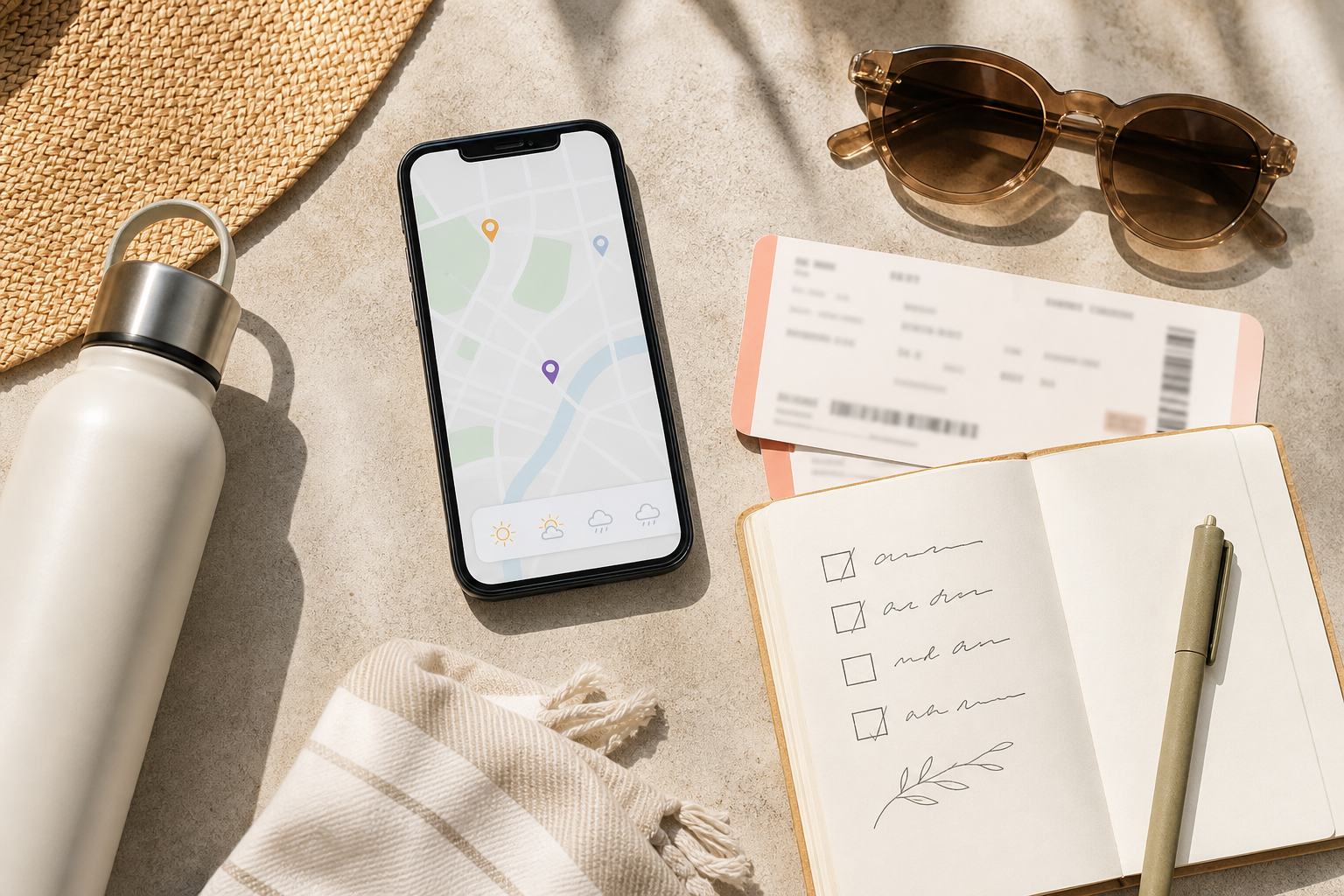
Use a backup block when the trip has any of these triggers.
1. The first day carries the emotional weight.
If the whole trip depends on a sunset cruise, proposal dinner, stadium event, once-a-year festival, or first-night food tour, do not schedule it immediately after a long-haul arrival unless the cancellation terms are forgiving. Put an easy neighborhood plan on arrival day and move the expensive anchor to the next usable slot.
2. Heat changes the value of the afternoon.
For warm-weather city trips, ask AI to rewrite the day as morning outdoor time, midday indoor recovery, and evening neighborhood time. Then verify opening hours and transit. A perfect 2 p.m. walking route on paper can become the wrong product if shade, water, distance, and rest stops are ignored.
3. The route depends on once-a-day transport.
Ferries, mountain trains, island flights, rural buses, and seasonal shuttles can turn one missed leg into a full-day failure. A backup block lets you move the main activity without rebuilding every hotel night. If that flexibility is impossible, book the safer route even if it looks less dramatic online.
4. You are traveling around a holiday or major event.
Holiday weeks compress demand into predictable choke points: airport security, parking, rental cars, beach roads, restaurant times, and post-event exits. Use the TopTravel.ai July 4th travel playbook for the bottleneck version of this rule, then apply the same thinking to any concert, race, tournament, fireworks night, or festival weekend.
Practical examples.
Family city break: Rome in July.
Do not stack the Colosseum, Vatican, and a long food walk into one heat-sensitive day. Ask AI to split the plan into one timed-entry anchor, one shaded or indoor fallback, one hotel-rest window, and one evening neighborhood. Then compare actual tour formats in the Colosseum guide and Vatican Museums guide before choosing a time slot.
Digital nomad week: Montreal or Quebec City.
If you need to work two afternoons, protect them before sightseeing. Ask AI to mark reliable workspace hours, easy public-transit routes, and evening experiences that do not require a perfect morning. If weather turns, your work block becomes the stabilizer rather than the first thing sacrificed.
Cooler summer escape: lake or mountain town.
The mistake is assuming cooler means friction-free. Popular trails, lake boats, scenic trains, and small-town restaurants can still sell out. Pair the Coolcation AI Rule with a backup day: one main outdoor plan, one lower-exposure alternative, and one indoor or short-hop option if weather moves in.

What to verify before you trust the AI answer.
AI is useful for pressure-testing logic, but it is not the source of truth for live travel rules. Before booking, verify the items that can change: official weather outlooks and local forecasts, airport and airline status, provider cancellation terms, attraction opening hours, timed-entry rules, transit schedules, ID requirements, and whether the experience still fits your group.
A good AI plan should tell you what to check. A bad one confidently hides the uncertainty. If the answer does not name its assumptions, ask it to do the itinerary again with explicit risk labels: fixed, flexible, weather-sensitive, crowd-sensitive, and must-verify.
Internal planning links worth opening next.
- AI Trip Planning in 2026 for prompt patterns that test costs, crowds, and bad itinerary logic.
- The Airport-First Rule for making arrival day less fragile.
- TopTravel.ai tour guides when you are ready to compare real experience formats.
Use AI to find the weak joint, then compare tours and activities that fit the real timing of your trip.