Last updated 09/05/2026.
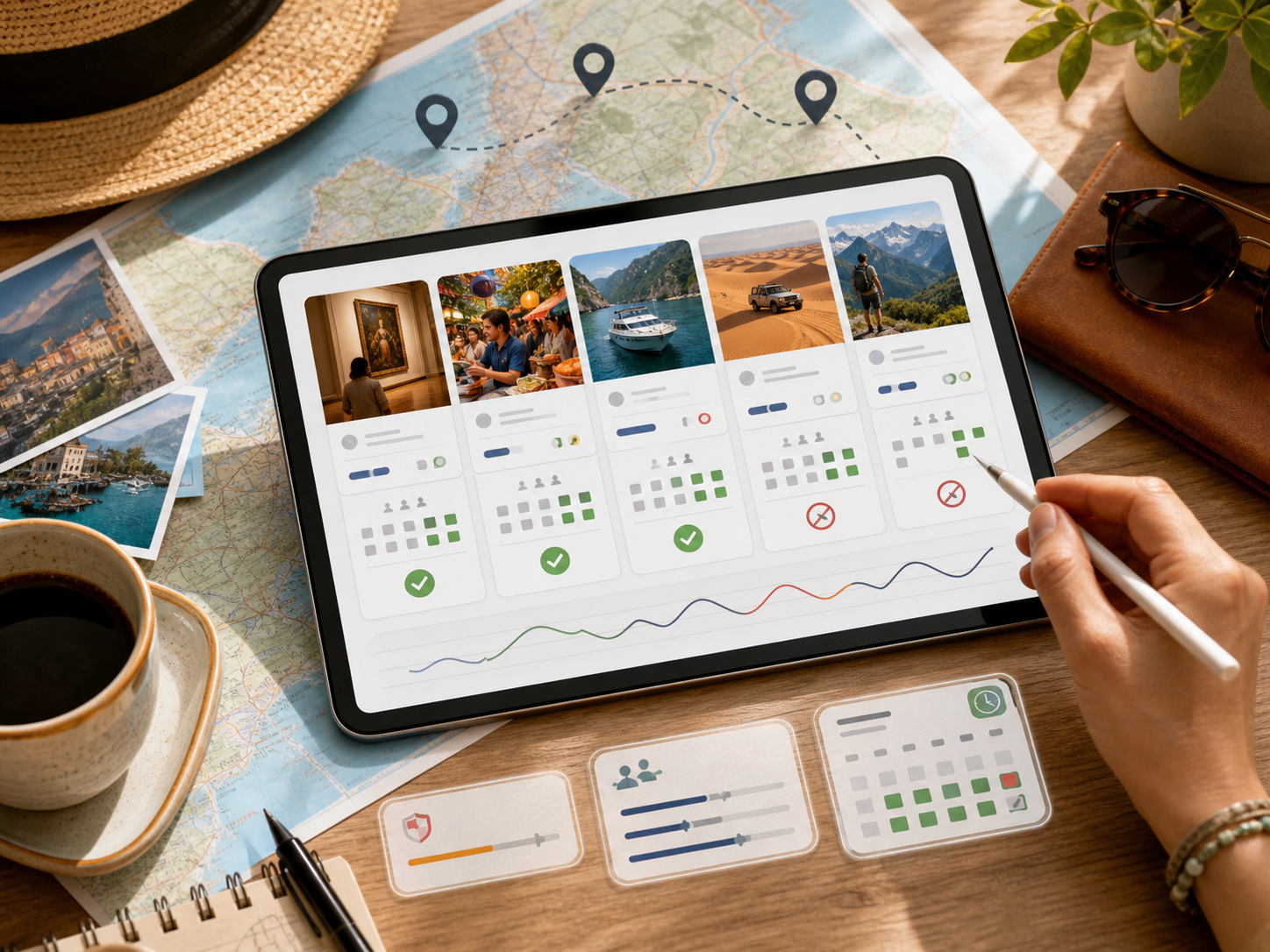
Do not ask AI to "make me an itinerary." That gets you a polished guess. Ask it to find the crowd traps, weak transfer logic, hidden costs, weather risk, and booking order that decide whether the trip works.
The biggest mistake in AI trip planning is asking for inspiration after you already know the destination. Inspiration is cheap. The expensive part is itinerary judgment: whether the transfer works, whether the attraction is worth the queue, whether the group has enough slack, whether the cheap hotel creates daily friction, and whether a booking should be locked now or left flexible.
Use AI like a skeptical travel operator. Give it your dates, arrival airport, hotel neighborhood, must-do experiences, walking tolerance, budget range, flight times, group constraints, and any non-negotiables. Then ask it to attack the plan.
Copy-ready prompts
Use these before the itinerary hardens.
Act like a local operations planner. For this itinerary, identify where crowds, timed entry, cruise arrivals, school holidays, heat, or day-of-week demand could break the day. Then give me a calmer version that protects the same main memory.
Audit this trip for hidden costs. Include transfers, luggage storage, resort fees, attraction add-ons, peak-hour rideshares, meals near landmarks, cancellation risk, and the cost of moving too much in one day.
Find every place this itinerary asks me to be in two places at once. Flag weak transfer assumptions, unrealistic museum timing, meal gaps, fatigue risk, and any booking that depends on everything going perfectly.
Choose the one experience that should define this trip. Build the day around that anchor, then remove or move anything that competes with it.
Pressure-test this plan for heat, rain, wind, smoke, or storm delays. Give me the morning version, the indoor backup, and the version I should cancel before it becomes miserable.
Rebuild day one from the airport, not from the city center. Include immigration, baggage, transfer, check-in, food, body-clock fatigue, and one flexible win near where I am sleeping.
Tell me whether this hotel base creates better days or cheaper nights. Compare transit friction, safety at the hours I will move, food options, landmark access, and where I will waste time.
Assume this group includes one tired traveler, one budget-sensitive traveler, one photo-focused traveler, and one person who hates waiting. Rewrite the plan so nobody quietly resents the day.
Put these trip decisions in the correct booking order. Tell me what to lock first, what can wait, what needs free cancellation, and what I should not book until weather or schedule is clearer.
Compare these tour options like a skeptical traveler. Focus on meeting point, start time, group size, guide value, access level, cancellation rules, recent review signals, and what happens if the day runs late.
Before I book, give me the one-paragraph argument against this itinerary. Then give me the smallest change that would make it meaningfully better.
Start with the day, not the destination.
Most AI itineraries overvalue famous names and undervalue the shape of the day. A plan can include the right places and still be bad if it creates a transfer sprint, a skipped meal, a museum at peak heat, or a tour that starts across town after a long-haul flight.
The better move is to describe the day you want first. Slow morning, one major memory, good lunch, enough room for a weather shift. Or early start, big landmark, short rest, evening food walk. Once the day has a shape, the tools can help you compare the bookings that support it.
Force AI to show its assumptions.
Ask for the assumptions behind every plan: walking speed, transfer time, ticket availability, crowd level, meal timing, neighborhood safety, and cancellation flexibility. If the answer depends on everything going right, it is not a travel plan. It is a draft.
This matters more in 2026 because many trips are being shaped by crowd pressure, access rules, heat, second-city demand, and travelers looking for more specific experiences. A generic city itinerary will miss those tradeoffs unless you make the model look for them.
Use TopTravel.ai as the booking checkpoint.
After the prompt pass, compare real experience categories: landmark access, food walks, boat routes, museums, viewpoints, day trips, neighborhood tours, airport transfers, and flexible arrival-day options. TopTravel.ai pages are built for that pre-booking moment: what to compare, what can go wrong, and when to verify live details with the provider.
Do the AI pass first. Then open the booking pages with sharper questions: Where does it meet? What happens if the flight is late? Is the guide the value or just the ticket? Does the start time fight the crowd or join it? Would the same memory be better one stop away?
Use the prompts to clean the itinerary, then compare tours, tickets, day trips, and flexible experiences before checking live availability.