Last updated 09/05/2026.
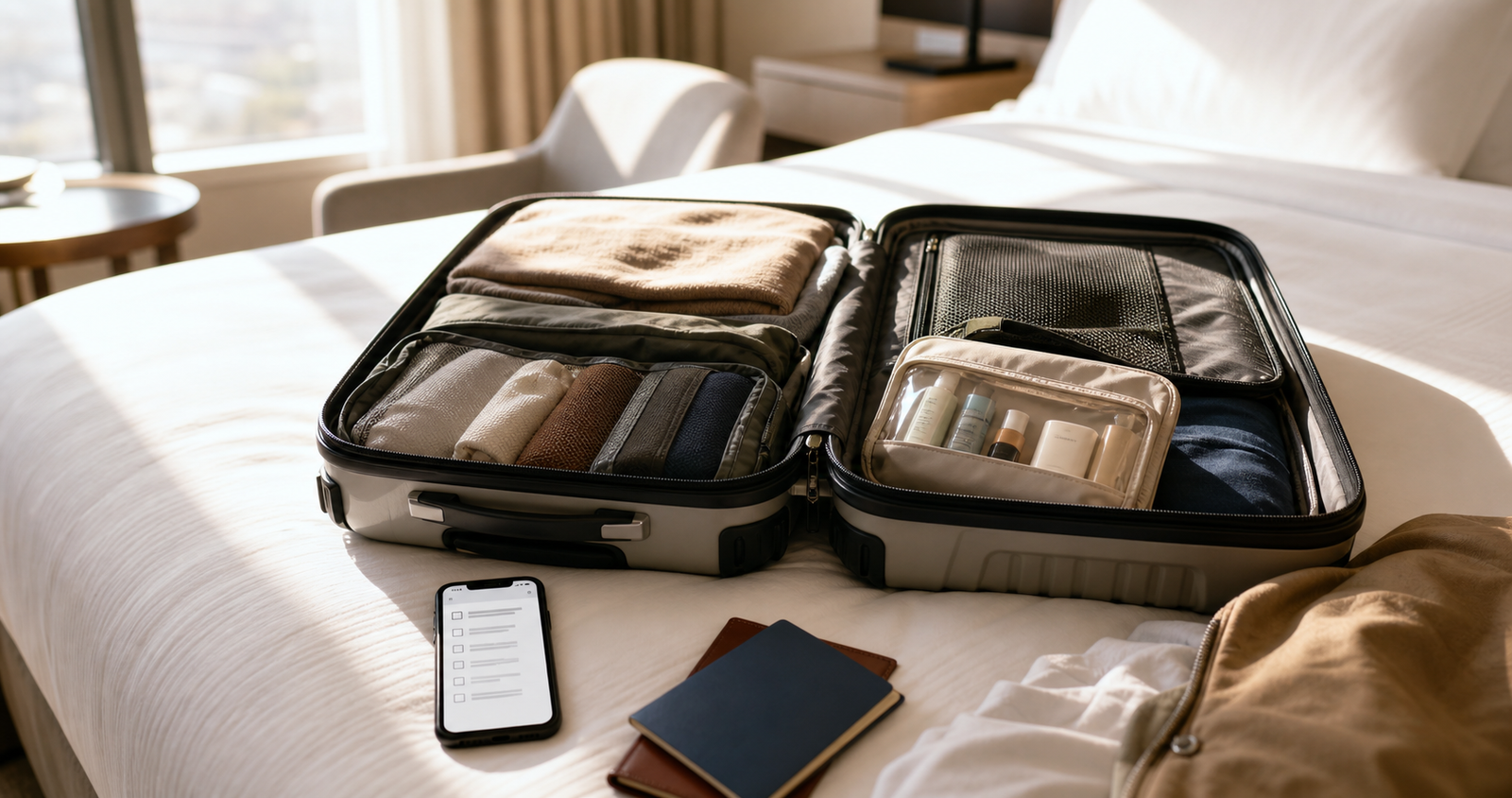
Before you add another "just in case" item, ask AI to audit the real trip: flight rules, weather range, laundry access, planned activities, liquids, shoes, and what would actually break the day. Then remove anything that does not solve a real scenario.
Carry-on-only travel keeps getting more attractive because the airport is the highest-friction part of many trips. A lighter bag can mean fewer check-in lines, less time at baggage claim, easier transit, and fewer choices when the terminal is busy. But bad carry-on packing creates its own problems: liquids that do not fit the rules, shoes that do not match the actual activities, clothes that only work once, and essentials buried when the gate agent asks for a fast decision.
The fix is not a generic minimalist list. The fix is an itinerary-first packing pass. Use AI to turn your actual dates, weather range, activities, accommodations, transport, and airport rules into a bag plan. Then verify anything regulated or high-stakes with official sources before you fly.
Copy-ready method
Ask AI to remove the wrong items before they become airport friction.
Give AI your destination, dates, hotel laundry access, weather range, planned tours, dress expectations, and baggage allowance. Ask it to pack for the days you will actually live, not for every imaginary emergency.
Choose three tops, three bottoms or base layers, and three shoe/activity categories at most. Make every piece earn two uses before it enters the bag.
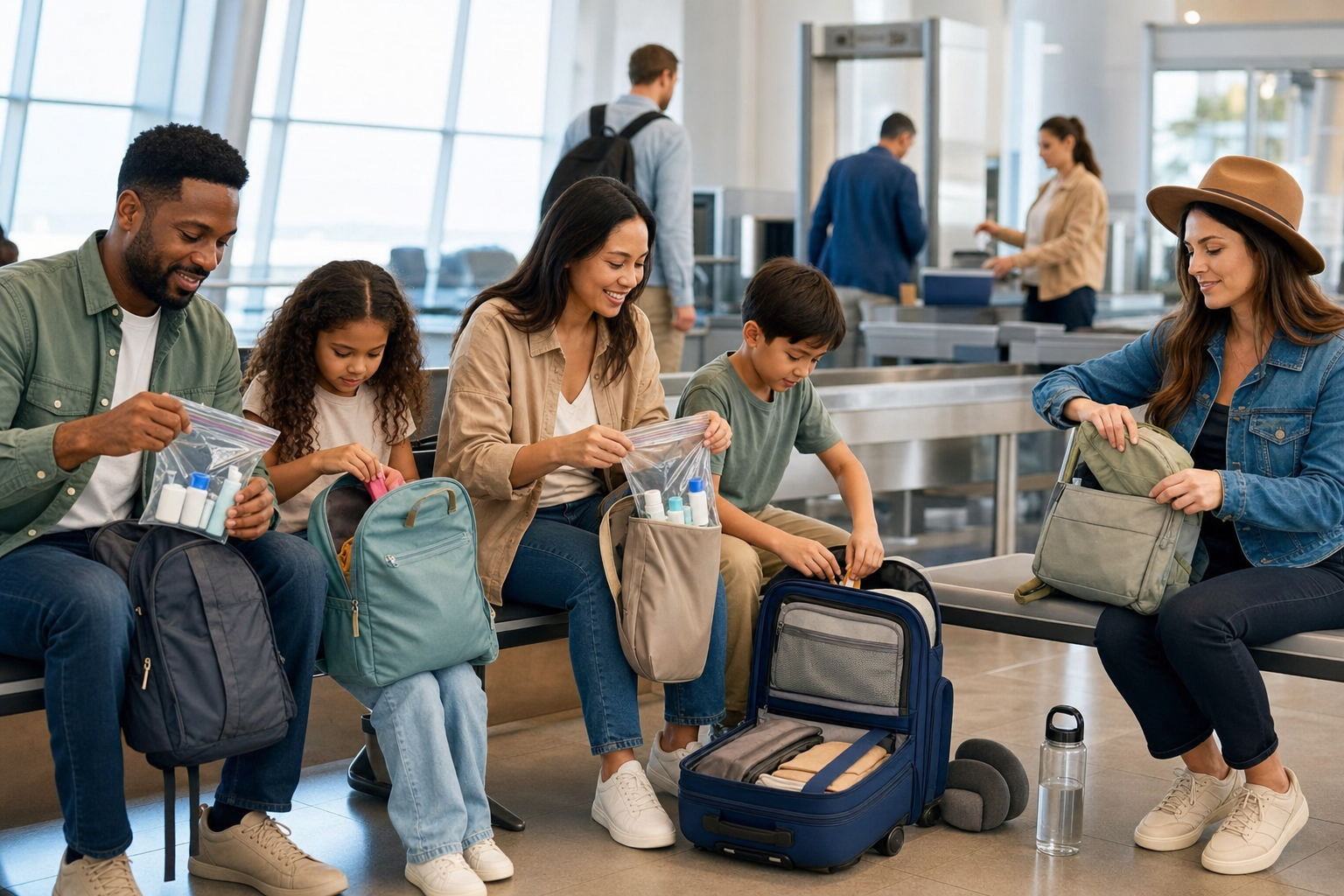
List every liquid, aerosol, gel, cream, and paste. Downsize what belongs in the 3-1-1 bag, move nonessential extras to checked luggage only if you are checking a bag, and confirm edge cases on TSA's What Can I Bring database.
Separate what must come out at security, what must stay reachable at the gate, what cannot go in the cabin, and what would ruin day one if the bag were gate-checked.
Pick the outfit you can wear on a delay day, casual dinner, and travel day. If nothing in the bag can do that, the packing list is too fragile.
Move cheap, bulky, easy-to-find items off the packing list. Keep only destination-specific, prescription, fit-sensitive, or timing-critical items in the bag.
Ask AI what to remove if the trip is colder, hotter, rainier, dressier, or more casual than expected. The best packing list has a deletion plan.
Before closing the suitcase, ask: what did I pack because of fear, what duplicates another item, and what would I happily pay to avoid carrying? Remove those first.
The prompt that makes packing practical.
Copy this into your AI tool before you pack: "Act like a skeptical one-bag travel planner. Build a carry-on-only packing list for this trip, then identify what I should remove. My destination is [place], dates are [dates], airline/bag limit is [limit], hotel has [laundry/no laundry], activities are [activities], dinners are [casual/dressy], weather range is [range], and I need [medical/family/work/photo gear constraints]. Separate must-pack, wear-on-plane, buy-there, and remove."
The important part is the second half: ask what to remove. Most packing content adds. Better packing subtracts. A useful list explains why each item survives.
Use official rules for the regulated stuff.
AI can organize your bag, but it should not be the final authority on airport security. TSA maintains current guidance for the liquids rule, acceptable IDs, travel checklist items, and the What Can I Bring database. FAA guidance points travelers to PackSafe and safety rules for hazardous materials and cabin behavior. If an item is expensive, regulated, sharp, battery-powered, pressurized, medicinal, or hard to replace, verify it directly before packing.
This is especially important for families and digital nomads. Baby items, medications, camera batteries, tools, sports gear, grooming items, and work equipment can sit in gray zones where a generic packing list is not good enough.

Pack by friction, not by category.
Do not start with shirts, pants, toiletries, electronics. Start with friction points: arrival day, security, first night, rain, heat, laundry, dress code, walking distance, and the activity that would be expensive to miss. If the bag handles those moments, it is probably enough.
A simple structure works for most trips: one airport pouch, one liquids pouch, one tech pouch, one health pouch, packing cubes by outfit layer, and a personal item that can survive a gate-check surprise. Your phone should hold offline copies of hotel details, booking confirmations, and the first transfer plan, but the bag still needs the physical essentials that make a delay manageable.
Internal links worth opening next.
If your packing list changes the itinerary, pressure-test the whole trip with AI trip planning prompts. If the first day is fragile, use the airport-first rule. For hot-weather trips, compare your bag against the summer backup-day rule so one heat wave does not ruin every outfit decision.
Use TopTravel.ai to compare arrival-day transfers, flexible tours, and experiences that fit the actual pace of your trip before checking live availability.