Last updated 07/28/2026.
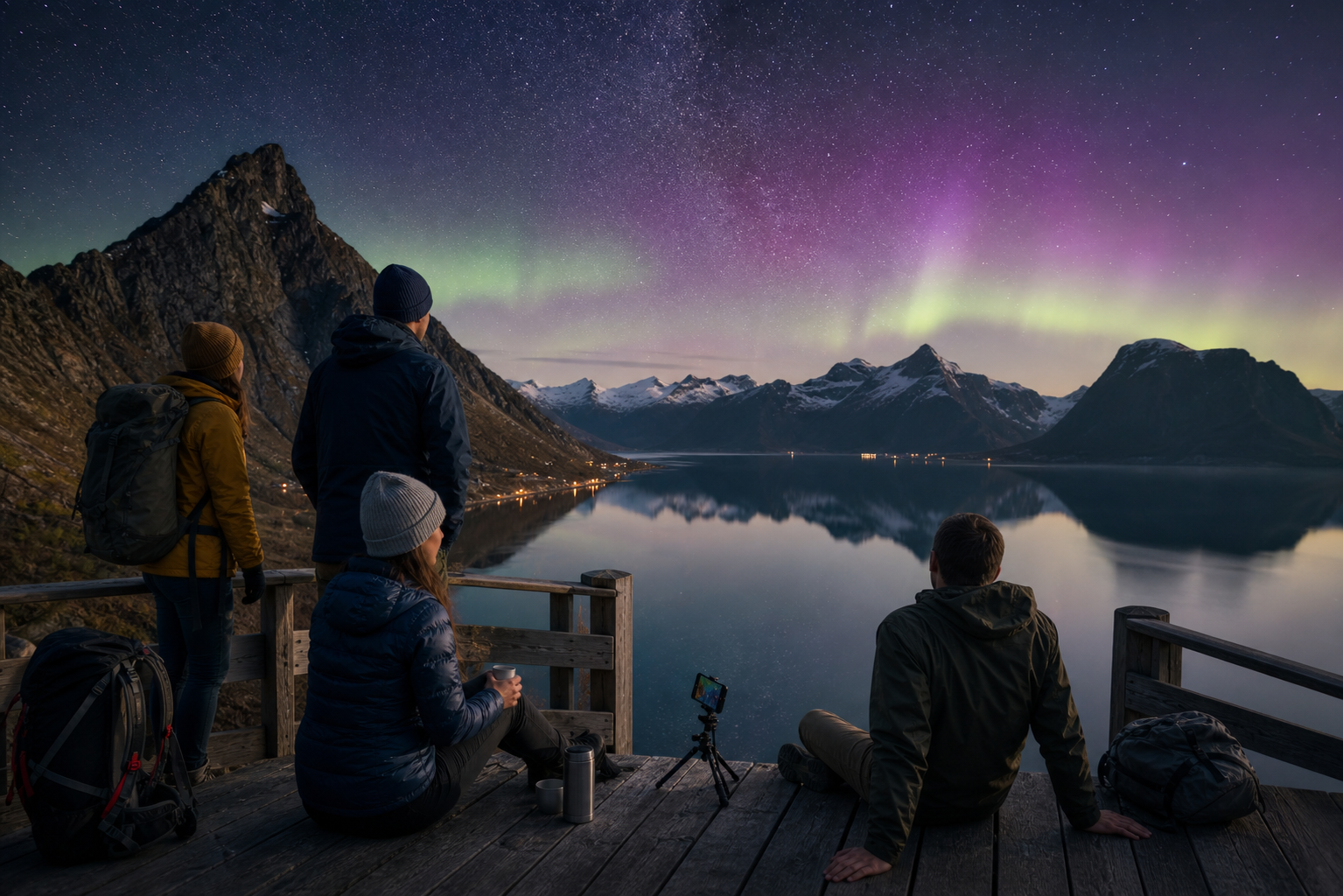
If the Northern Lights are one of your main reasons for going to Iceland, do not build the whole trip around one fixed aurora night.
Build it around a weather window instead.
That is the practical Reykjavik rule.
Visit Reykjavik says the Northern Lights are a winter experience and warns that viewing is affected by cloud cover, moonlight, and urban light pollution. The Icelandic Meteorological Office says the spectacle requires dark and partly clear skies.
That changes the planning logic.
The biggest mistake is not missing the strongest solar activity forecast.
It is giving yourself only one clean chance to use it.
Why this matters before you lock the trip
If you are planning a winter 2026-2027 Reykjavik trip now, the most useful early decision is not which single night looks best on paper.
It is whether your stay gives the sky more than one realistic chance.
The official Visit Reykjavik guidance says to improve your luck by seeking viewing spots by the sea or outside the city centre and by checking the local weather and aurora forecast.
The official Icelandic Meteorological Office aurora page is even more direct: aurora viewing needs dark and partly clear skies, and the forecast combines cloud cover with an auroral activity scale.
In other words, this is not a museum ticket problem.
It is a conditions problem.
The Reykjavik rule
Book enough nights to give the sky more than one chance.
For most first-timers, that means one of these trip shapes:
- 3 nights: the minimum shape if seeing the lights really matters
- 4 nights: the calmer version if you want better odds without making the whole trip feel like a chase
- 1 or 2 nights: only acceptable if the Northern Lights are a bonus, not the headline reason for going
This is the decision that matters more than obsessing over the exact perfect evening weeks in advance.
Why one-night aurora bets fail
A one-night Northern Lights plan sounds efficient.
In practice, it often depends on too many things breaking your way at once:
- enough darkness
- enough clearing
- low enough light pollution
- enough energy after a long travel day or daytime excursion
- a forecast that still holds once you are actually there
That is why Reykjavik trips go wrong in a specific pattern.
People book one aurora tour for the night they like best on paper.
Then the real trip arrives.
The flight lands late.
The city dinner runs long.
Cloud cover shifts.
The group is tired.
The only Northern Lights chance was technically booked, but the trip was never really shaped to support it.
The better Reykjavik trip shape
The best Northern Lights trips usually separate the daylight Iceland memory from the night-sky gamble.
That often looks like this.
Trip shape 1: The smart 3-night Reykjavik window
Best for travelers who want a real shot without turning the whole holiday into a weather siege.
- Night 1: no aurora pressure after arrival
- Day 2: main daytime Iceland experience
- Night 2: first real aurora attempt
- Day 3: lighter city or recovery block
- Night 3: second aurora chance
This is the most useful shape for short winter trips.
It protects the Northern Lights from arrival chaos and gives you a second chance if the first sky does not cooperate.
Trip shape 2: The lower-stress 4-night version
Best when the lights are a core trip goal and you do not want every evening to feel loaded.
- one arrival/reset night
- one big scenic day such as the Golden Circle
- one lighter geothermal or city day
- two or three realistic aurora windows across the stay
This version works better for couples, photographers, and travelers who know they get disappointed when a one-shot plan misses.
Trip shape 3: The bonus-only version
Best when Iceland itself is the goal and the aurora would simply be a great extra.
- keep the city and day tours as the trip anchors
- treat any Northern Lights outing as optional upside
- do not let one cloudy night make the trip feel like a failure
This is the healthiest mindset when the lights are not the only reason you booked Iceland.
Guided hunt or DIY from Reykjavik?
A guided Northern Lights hunt is usually the better call when:
- this is your first Iceland winter trip
- you are staying in Reykjavik without a car
- you only have a few nights
- you do not want to manage route decisions after dark
- you want a cleaner shot at leaving the brightest city-light zones
DIY viewing makes more sense when:
- you have a car and are comfortable driving in winter conditions
- you have enough nights to stay patient
- the lights are part of a broader Iceland road-trip plan
- you are genuinely happy to follow conditions instead of locking a structured tour
For many short Reykjavik stays, the guided option is the more realistic answer.
Not because it controls the sky.
Because it removes a layer of friction from the part you can control.
The daytime mistake that hurts the night
A lot of bad Northern Lights planning starts with overbuilding the day.
Travelers stack a long excursion, a big dinner, and an aurora outing on the same date.
That can work.
It often does not.
If the Northern Lights matter, keep the aurora night from carrying too much extra weight.
That usually means:
- not putting your first serious aurora attempt on arrival night
- not attaching it to the longest bus day of the trip if your group gets drained easily
- not assuming a city-centre evening is the same thing as a real dark-sky attempt
- not forcing the lights to compete with every other must-do on the same itinerary
A trip can be full and still be the wrong shape.
How to use Reykjavik as a better aurora base
Reykjavik works best when you treat it as a flexible base, not a fixed viewing box.
Use the city for sleep, meals, and easy daytime structure.
Use your darker nights for the actual aurora attempt.
The official Visit Reykjavik guidance specifically tells travelers to improve their odds by getting closer to the sea or outside the city centre, and to watch local forecasts.
That is the practical takeaway.
You are not booking a guaranteed show.
You are building a trip that can move with conditions.
A quick booking check before you pay for anything
Ask these five questions:
- If the sky is cloudy on my first planned aurora night, do I still have another real chance?
- Am I putting too much pressure on arrival night?
- Do I have one daytime Iceland highlight and one lighter day, instead of two exhausting ones back to back?
- Am I depending on bright central Reykjavik to deliver a good viewing experience without leaving the lights?
- Would a guided Northern Lights hunt remove more stress than it adds?
If those answers make the trip feel fragile, fix the shape before you book more activities.
Where the Northern Lights hunt fits best
A Reykjavik Northern Lights tour is strongest when it sits inside a trip that already has some breathing room.
That means:
- a city stay long enough for at least one backup night
- one clear daytime anchor instead of nonstop bus days
- a realistic expectation that the lights are conditional, not owed
- a traveler who wants help getting out of the brightest urban viewing zones
That is also why many Iceland trips improve when the Northern Lights are paired with one major daylight experience instead of five smaller ones.
A cleaner trip shape usually beats a busier one.
Sources to check before you book
- Visit Reykjavik, The Northern Lights: https://visitreykjavik.is/northern-lights
- Icelandic Meteorological Office aurora forecast: https://en.vedur.is/weather/forecasts/aurora/
- Icelandic Meteorological Office station and area forecasts: https://en.vedur.is/weather/forecasts/areas/
- TopTravel.ai Reykjavik destination hub: https://toptravel.ai/reykjavik/
- TopTravel.ai tour decision guides: https://toptravel.ai/tours/
Bottom line
For a Reykjavik Northern Lights trip, the smarter move is not to chase one perfect forecast from far away.
It is to book a trip shape that can survive a miss.
If the aurora is a real trip priority, give yourself a weather window, keep the first night light, and let Reykjavik work as a flexible base instead of a one-shot bet.
Use the related planning guides, then browse the tour catalog after the trip shape is clear.