Last updated 08/01/2026.
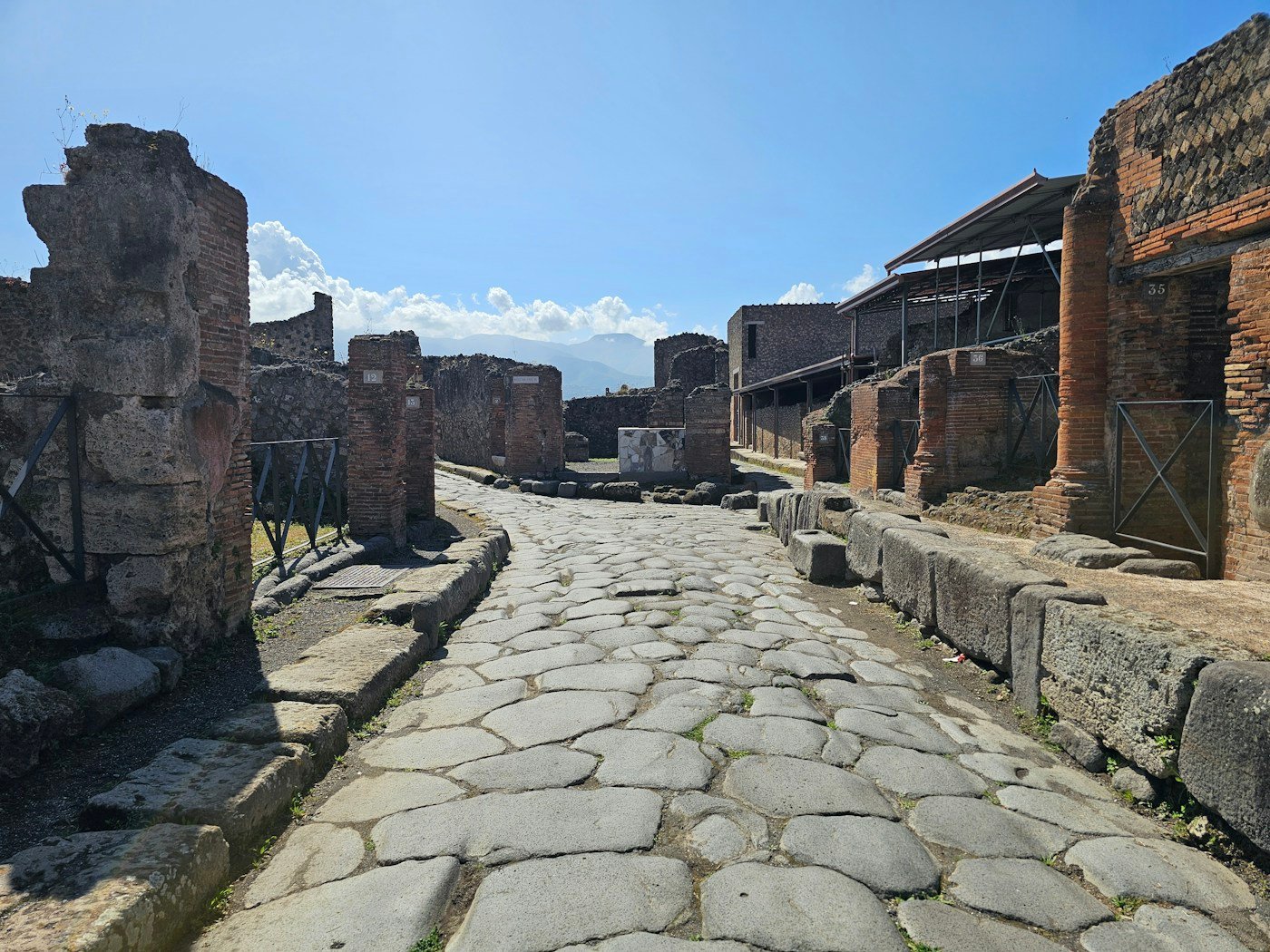
If Pompeii is one of your main Italy priorities this late summer, protect Pompeii first and treat Mount Vesuvius as optional unless you are booking a combined guided day or staying closer to the site.
That is the practical rule.
The official Pompeii Sites timetable says that from 16 March to 14 October, Pompeii opens at 9:00 a.m., allows last entrance at 5:30 p.m., and closes at 7:00 p.m. The Vesuvius National Park says Gran Cono entrance tickets can only be purchased online.
Those two details matter more than they look.
One stop is a very large archaeological site that rewards protected time. The other is a separate park visit that already assumes extra planning.
Why this is timely right now
Late summer is when southern Italy trips start to break in the same predictable way.
Travelers trying to squeeze Pompeii, Vesuvius, Naples transfers, Amalfi Coast positioning, and hotel check-ins into one day usually discover the problem too late. The day looks efficient on paper and starts feeling brittle once tickets, walking load, transit timing, and exposed outdoor time all stack together.
At the same time, the official 2026 Pompeii hours still give travelers a long site window through mid-October, while the Vesuvius park still treats crater entry as something you plan deliberately online.
So the smartest late-summer question is not just, Can I do both?
It is, Which part of this day actually matters enough to protect first?
The late-summer Pompeii rule
If Pompeii is the headline experience, lock Pompeii first. Add Vesuvius only when the route, energy, and ticket setup are already working in your favor.
For most travelers, that means:
- make Pompeii the main anchor if ancient history is the reason for the trip
- treat Vesuvius as an add-on only if you have a combined guided format, a calm overnight base, or real buffer in the day
- stop assuming a self-built late-summer combo is automatically the best-value version
- check whether your booking includes crater access, transport, and entry fees instead of comparing only headline price
Pompeii can carry the day on its own. That is not a failure of the itinerary. That is usually the better itinerary.
What the official site rules actually change
The official Pompeii Sites timetable makes one thing clear: Pompeii is not a one-hour checkbox.
Through 14 October, Pompeii runs on a 9:00 a.m. to 7:00 p.m. day with last entrance at 5:30 p.m. That gives you room to build a serious ruins visit if you protect it.
The Vesuvius National Park then adds a second planning signal. Its official visitor information says tickets for the Gran Cono can only be purchased online.
That does not sound dramatic, but it changes the shape of the day.
Vesuvius is not just a spontaneous scenic stop you casually bolt on after a long archaeological visit. It is another timed, effort-based decision with its own access logic.
When the combo day still makes sense
A Pompeii and Vesuvius combo can still be the right move when:
- you are booking a combined guided day that already handles the transport chain cleanly
- both sites matter equally and you are comfortable with a full outdoor day
- you are staying locally enough that a longer route does not threaten the next transfer
- your group wants one big history-and-landscape day more than a slower museum-style visit
This is the key distinction.
A combo day can be good.
A combo day built on wishful timing is usually not.
The day shapes that usually work better
Day shape 1: Pompeii as the only major anchor
Best for first-time visitors who care more about the archaeological site than saying they technically did two famous stops.
- start with Pompeii as the protected priority
- leave room for the site to take longer than expected
- keep the evening flexible instead of attaching another high-friction outing
- use Vesuvius only as optional upside if energy and logistics still feel strong
This is the most reliable shape.
Day shape 2: Combined guided Pompeii and Vesuvius route
Best for travelers who truly want both and do not want to self-manage every transfer, ticket check, and timing decision.
- use one coordinated booking instead of stitching together separate moving parts
- verify exactly what is included before paying
- pay attention to total duration, walking intensity, and return timing
- treat the guide format as part of the value, not just the transport
This is usually the cleanest way to make the combo feel intentional instead of chaotic.
Day shape 3: Split the experiences across different days or bases
Best for slower Italy trips, road trips, or travelers already moving through Naples or the Bay of Naples area.
- let Pompeii be its own culture day
- place Vesuvius on a lighter second day if the weather and energy make sense
- avoid forcing both experiences into a transfer-heavy schedule
- keep late-summer fatigue from ruining two good experiences at once
The mistake travelers keep making
They confuse possible with advisable.
Yes, many travelers can physically do both Pompeii and Vesuvius in one day.
But that does not mean the self-built version is the smartest late-summer plan.
It starts breaking down when you also care about:
- having enough real time inside Pompeii
- avoiding a rushed archaeological visit followed by another exposed outdoor block
- protecting the next train, hotel move, or long drive
- knowing whether Vesuvius crater access is actually included in what you booked
- not turning one of the strongest history days in Italy into a race against your own schedule
A five-question booking check
Ask these before you lock anything:
- If I had to choose only one, is Pompeii or Vesuvius the actual reason for this day?
- Am I booking a combined guided route, or am I stitching together separate tickets and transport on my own?
- Will I still enjoy the second stop after the first one runs long, feels hotter, or takes more walking than expected?
- Does my booking clearly say whether crater access, transport, and entry fees are included?
- Am I protecting the next transfer, hotel move, or evening plan, or gambling that the whole day will run perfectly?
If those answers make the combo feel fragile, simplify the day before you pay.
What to verify before booking
Use live sources for the final check because hours, access rules, inclusions, and transport arrangements can change.
Verify:
- the current Pompeii opening hours and last-entry time
- whether your date falls inside the longer spring-to-mid-October timetable
- whether Vesuvius crater entry must be arranged separately or is handled by your provider
- whether the tour includes transport, entries, guide service, or only part of the route
- whether your group actually wants a long two-site outdoor day
Useful TopTravel.ai pages before you book
- Pompeii destination hub: https://toptravel.ai/pompeii/
- Pompeii and Mount Vesuvius day-trip guide: https://toptravel.ai/tours/pompeii-vesuvius-day-trip/
- TopTravel.ai Rome tour guides: https://toptravel.ai/rome/
Sources to check before you go
- Pompeii Sites official timetables and tickets: https://pompeiisites.org/en/visiting-info/timetables-and-tickets/
- Pompeii Sites official website: https://pompeiisites.org/en/
- Vesuvius National Park official visitor information: https://www.parconazionaledelvesuvio.it/en/visit-the-park/
- Vesuvius National Park official website: https://www.parconazionaledelvesuvio.it/en/
Bottom line
For late-summer 2026, the smarter Pompeii move is usually not forcing Vesuvius into the day by default.
It is protecting Pompeii first, then adding Vesuvius only when the booking format, timing, and group energy still make sense.
If Pompeii is the reason for the trip, do Pompeii first and treat Vesuvius as optional, not automatic.
Use the related planning guides, then browse the tour catalog after the trip shape is clear.