Last updated 09/05/2026.
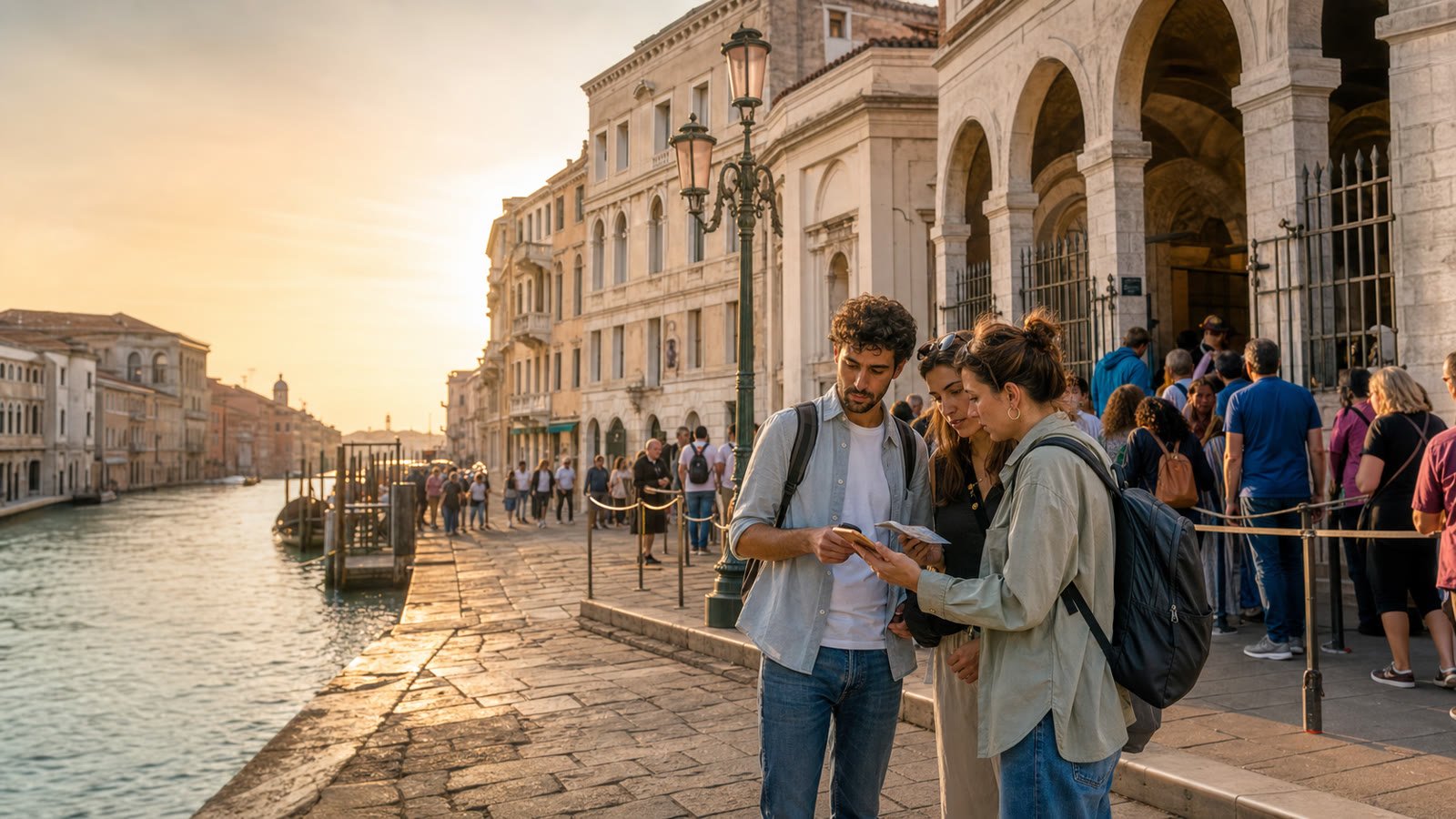
The anti-tourist backlash is not a reason to stop traveling. It is a warning that lazy travel is getting more expensive, more restricted, and less welcome. The smart move is to book legal stays, smaller experiences, better hours, and neighborhoods that can actually absorb your visit.
Here is the uncomfortable version: a lot of travelers say they want authentic places, then book in ways that make those places harder to live in.
That is why the anti-tourist backlash keeps spreading through travel headlines. Residents are tired of blocked sidewalks, party noise, packed transit, housing pressure, cruise-day spikes, illegal rentals, and visitors who treat neighborhoods like a backdrop. Travelers are tired too, even if they use different words. They complain about lines, fees, heat, sold-out time slots, and famous streets that feel less like cities and more like queues with architecture.
The argument gets framed as locals versus tourists. That is too simple. The real divide is extractive travel versus useful travel.
Tourist backlash is a booking signal.
When a city adds an access fee, caps groups, limits rentals, or warns visitors away from illegal accommodation, it is telling you something practical: the old frictionless version of that trip is gone.
Venice's official 2026 access-fee portal lists selected application dates from April 3 through July 26, with hours from 8:30 a.m. to 4 p.m. Venezia Unica explains the fee is EUR 5 when paid by the fourth-last day before access and EUR 10 after that window. Barcelona City Council tells visitors that licences for holiday lets will be withdrawn by 2028, and its tourist-accommodation page explicitly tells visitors to check whether a tourist flat is legal before booking.
Those are not abstract policy debates for trip planners. They change where you sleep, what day you go, how much slack you need, and whether the cheapest option is actually a trap.
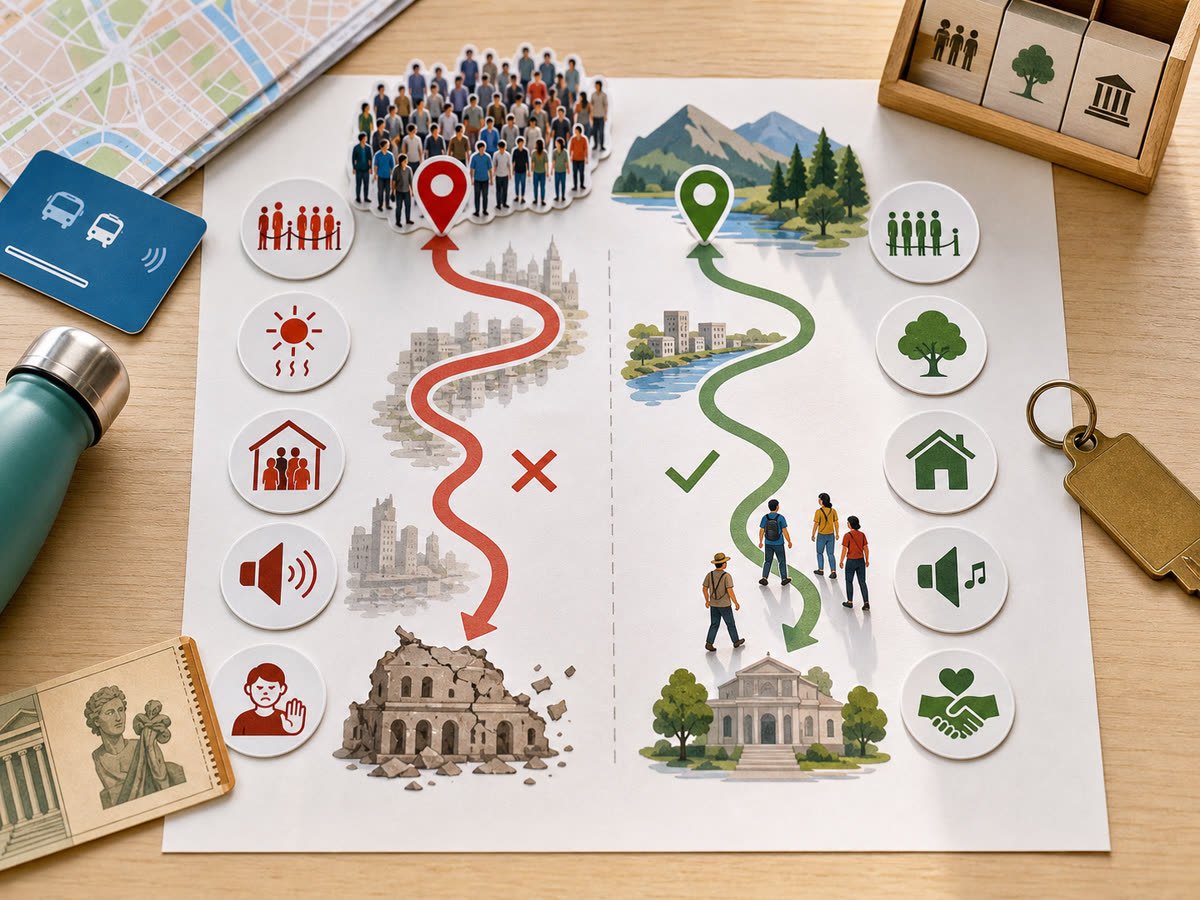
The viral take people will argue with.
You are not entitled to the cheapest possible version of someone else's neighborhood.
That sentence annoys people because it sounds moral. Treat it as practical instead. If the bargain room is illegal, the neighborhood is pushing back, the check-in feels sketchy, and the city is already cracking down, you did not find a hack. You found risk dressed as a discount.
The same logic applies to tours. If a listing packs too many people into a fragile street at the worst hour, the price may be low but the real cost shows up in the experience: slower movement, thinner guide attention, worse photos, more resident friction, and a day that feels like everybody is in everybody's way.
The rule
Before booking, ask who absorbs the cost of your convenience.
Do not treat local frustration as background noise. Shift your base, timing, group size, route, or accommodation before the trip becomes harder for everyone involved.
In high-pressure cities, an illegal short-term rental can leave you exposed while adding pressure to neighborhoods already fighting housing stress.
A small guided walk, timed-entry slot, food tour, museum hour, or ferry route can put money and attention into the place without dumping you into the same bottleneck.
A city does not add access fees or visitor rules because everything is easy. Fees tell you where crowd pressure is already high enough to shape the day.
How to travel where locals are already fed up.
Start by separating the destination from the behavior. Barcelona is not the problem. Venice is not the problem. Kyoto, Amsterdam, Lisbon, Florence, Dubrovnik, and other high-demand places are not the problem. The problem is the pattern that turns a real city into a high-volume extraction zone.
Stay somewhere legal. Do not assume a platform listing is enough proof in a city with active enforcement. Use hotels, licensed apartments, or clearly compliant stays where the rules are transparent. If the city gives you a way to check, use it.
Move the visit out of the worst pressure window. Early entry, late afternoon, shoulder season, weekday visits, and smaller guided routes are not just comfort upgrades. They reduce the chance that your trip collides with everyone else's plan at the same minute.
Spend with the place, not just near it. A good local guide, food walk, museum route, boat trip, cooking class, market visit, or day trip can put your money into an experience that explains the destination instead of treating it like scenery.

The booking checklist.
Use this before you book a famous city in 2026.
Is the accommodation legal? If you cannot verify it in a city that cares about licensing, do not make the neighborhood carry your uncertainty.
Is the time slot fighting the crowd? If every visitor wants the same bridge, square, museum, or viewpoint at the same hour, move the hour or change the route.
Does the tour make the place better to understand? A strong guide can turn a crowded city into a legible city. A weak group tour can turn it into a slow traffic jam.
Does the plan leave money with real operators? Choose experiences with clear operators, clear terms, recent reviews, and cancellation rules you can live with.
Would the same experience be better one stop away? The best version of the trip may be a nearby district, island, market, town, or day route rather than the most obvious landmark cluster.
Where TopTravel.ai fits.
TopTravel.ai is built for the moment before the booking click. The destination and tour pages help you compare what the experience actually is, what can go wrong, and when you need to check live availability, recent reviews, meeting points, and cancellation terms with the booking provider.
The goal is not to shame travel. It is to make travel less lazy. Famous places can still be worth it. The trick is to book the version that gives you a better day and gives the place less reason to push back.
Compare legal stays, calmer timing, smaller routes, and useful guided experiences before a cheap plan turns into a crowded, restricted, or unwelcome one.