Last updated 09/05/2026.

Choose one anchor experience per travel day. Make it specific enough to remember, protect enough time around it, and stop treating every hour like a slot that needs filling.
Every overpacked trip starts with good intentions. You save the museum, the viewpoint, the boat ride, the famous neighborhood, the market, the food stop, the sunset plan, and the day trip. Then the actual day arrives and it feels less like travel than project management in nicer shoes.
The one-experience rule fixes that. It does not make the trip smaller. It makes the memory clearer.
Choose the story the day is allowed to tell.
Before comparing tickets or tours, ask one question: what would make this day easy to describe later? "We watched Paris light up from the river." "We ate through Shinjuku with someone who knew where to stop." "We crossed the desert at sunset." That sentence is your anchor.
A strong anchor can be famous, local, active, quiet, guided, independent, romantic, family-friendly, or strange in the best way. The point is not rarity. The point is focus.
The rule is brutally simple.
Pick one primary experience for the day. Put it at the time when it has the best chance of being good. Then add only the things that make it easier: a slow breakfast, a nearby neighborhood, a transit buffer, a flexible dinner, or a backup if weather changes.
That is how a day stops collapsing under its own ambition. You still get discovery, but you stop forcing every discovery onto a schedule.
Group-chat version
Send this before anyone adds ten more stops.
- What is the one thing we would be sad to miss?
- What time of day makes that experience best?
- What should we remove so the anchor actually feels good?
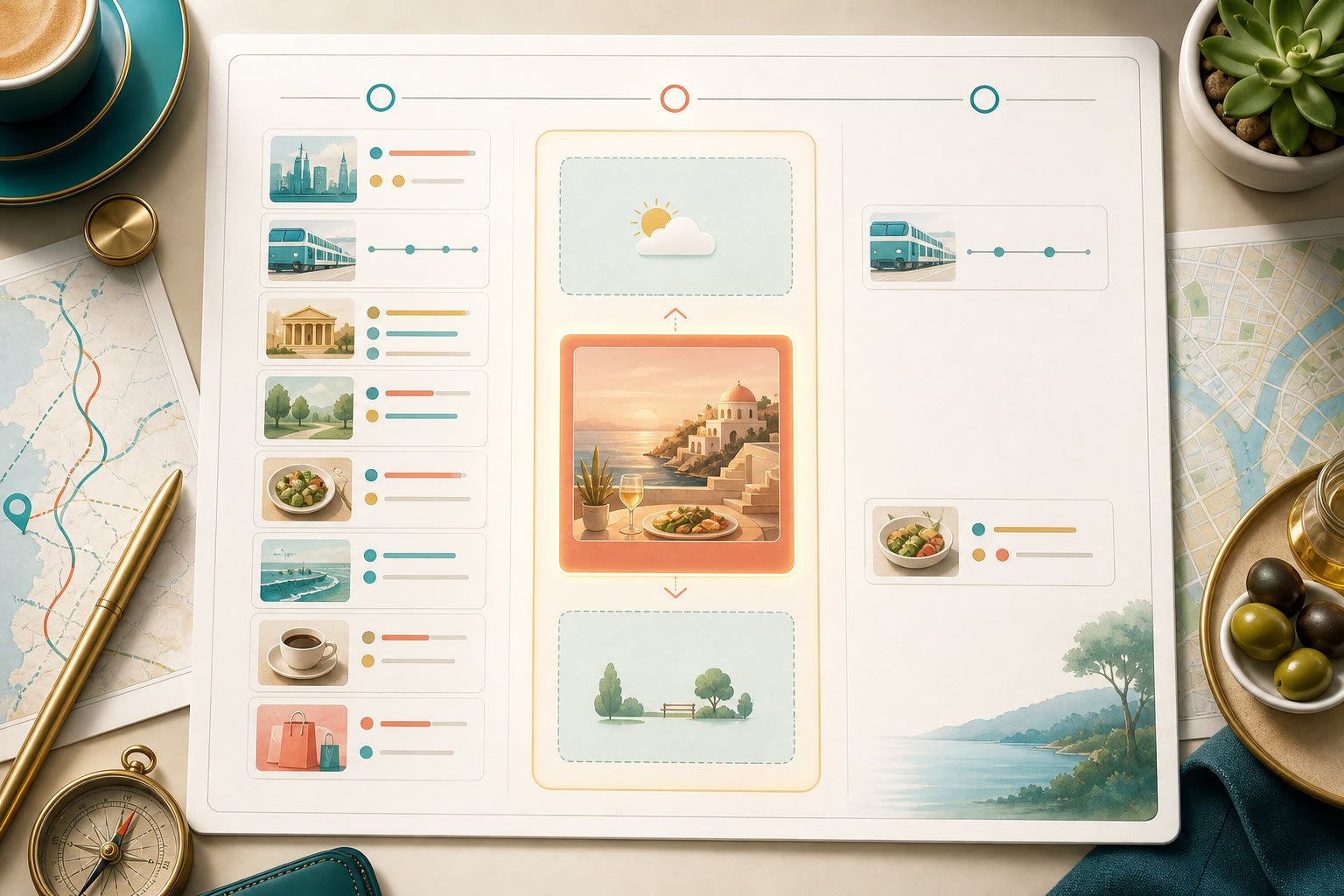
Good anchors make decisions easier.
If the anchor is a landmark, compare access level, timed entry, security, and whether a guide adds context. Start with pages like Eiffel Tower tickets and Seine cruise options or Colosseum tours and Roman Forum tickets.
If the anchor is food, protect your appetite and your evening. A route like a Tokyo food tour works better when it is not squeezed between three daytime obligations and an early train.
If the anchor is scenery or nature, respect distance. A Dubai desert safari, a volcano route, or a full-day mountain trip needs space before and after it. The memory gets better when the logistics are not fighting it.
What to cut first.
Cut anything you are adding only because it is nearby, famous, or easy to explain to someone else. Keep the stop that gives the day texture. A market before a food walk makes sense. A random museum before a sunset cruise might not.
The best trips have contrast, not clutter: one planned highlight, one flexible meal, one place to wander, and enough room for the city to surprise you.
The souvenir test.
Before booking, imagine you are home and someone asks, "What was the best day?" If you cannot picture the answer, the day probably needs a stronger anchor or fewer moving parts.
That is the secret. Memorable travel is not made by collecting every possible option. It is made by giving one good option enough space to become a story.
Use TopTravel.ai to compare trip styles, then check live availability, reviews, prices, and booking terms with the provider.